Reliability and Thermal Management
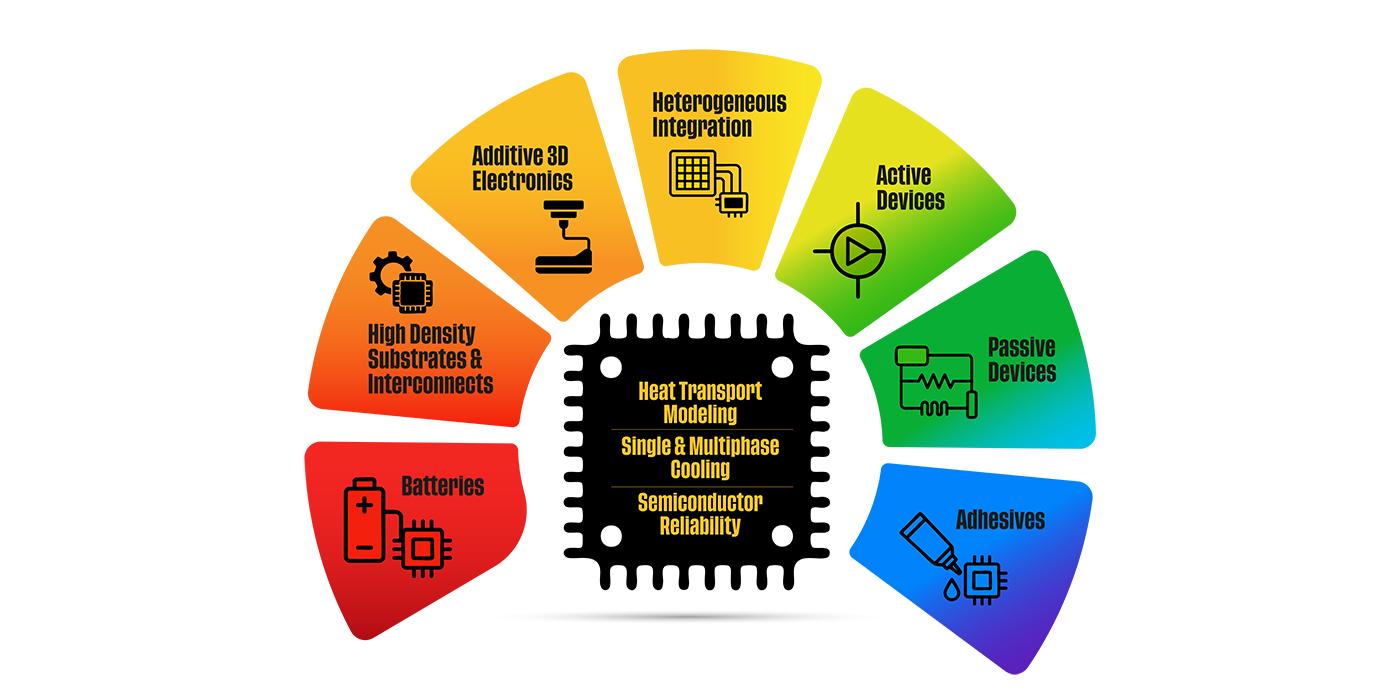
At the University of Maryland, research in Reliability and Thermal Management for Semiconductors focuses on advancing materials, design, and modeling techniques to ensure device performance, efficiency, and longevity under demanding thermal conditions.
Heat Transport Modeling in Semiconductors involves studying how heat is generated, conducted, and dissipated within semiconductor materials and devices. By using analytical, numerical, and experimental methods, researchers model phonon transport, thermal boundary resistance, and non-equilibrium effects to optimize device performance, prevent overheating, and enhance reliability in advanced electronic and optoelectronic systems.
________________________________________________________________________________
• Phase Change Materials
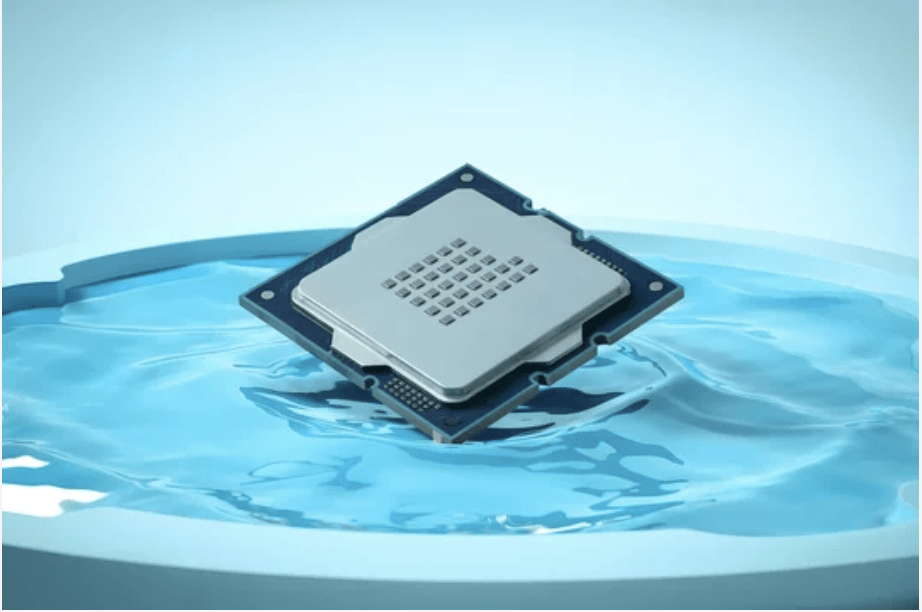
• Immersive Cooling
• Multiphase Cooling
• Near Junction Thermal modeling
• Computational Thermo-Solutal Problems
Single and Multiphase Cooling explores thermal management techniques that remove heat from high-power electronic and semiconductor devices using either single-phase fluids (like air or liquid coolants) or multiphase systems involving phase change (such as boiling or condensation). Single-phase cooling offers simplicity and reliability, while multiphase cooling enables higher heat transfer efficiency and compact designs. Research in this area focuses on understanding fluid dynamics, phase-change mechanisms, and system integration to develop innovative, high-performance cooling solutions for next-generation electronics.
________________________________________________________________________________
• Phase Change Materials
• Immersive Cooling
• Multiphase Cooling
• Near Junction Thermal modeling
• Computational Thermo-Solutal Problems
Semiconductor Reliability focuses on understanding and improving the long-term performance and durability of semiconductor devices under electrical, thermal, and mechanical stresses. Research in this area examines failure mechanisms such as electromigration, thermal fatigue, dielectric breakdown, and material degradation. By combining modeling, accelerated testing, and advanced characterization, scientists develop predictive tools and design strategies to enhance device lifetime, ensure consistent operation, and support the growing demands of modern electronics and power systems.
________________________________________________________________________________
• Reliability of High-Density Substrates, interposers and & Interconnects
• Multi-scale Materials Metrology
• Mechanical Shock
• Temperature Humidity, Bias
• Vibration
Phase Change Materials
Immersive Cooling
Near Junction Thermal modeling
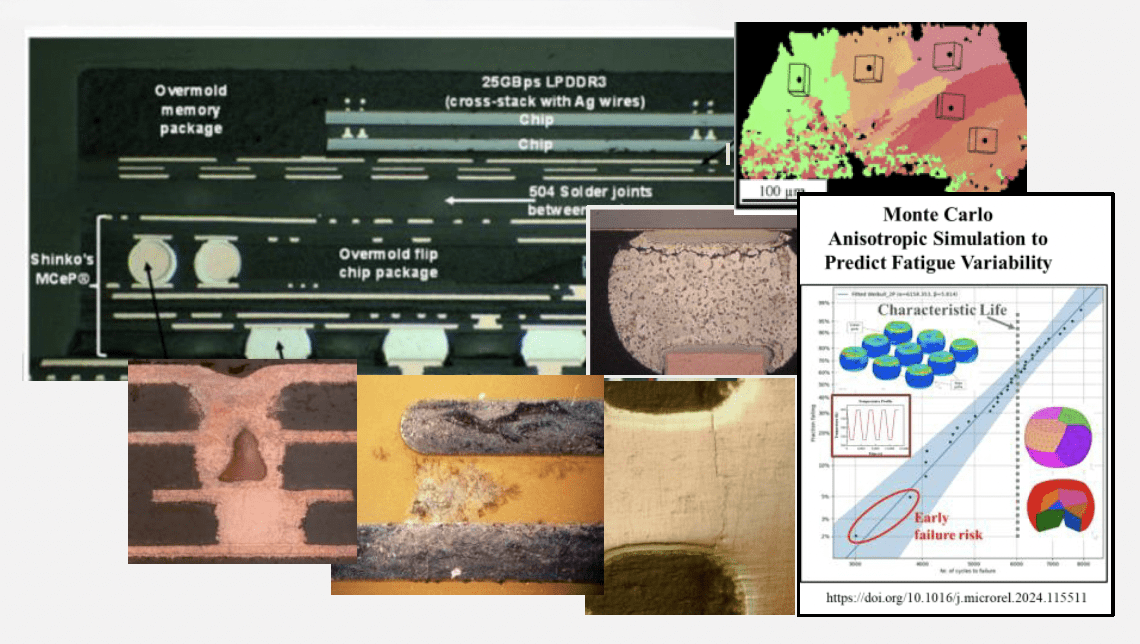
High-Density Substrate, Interposer, and Interconnect Reliability
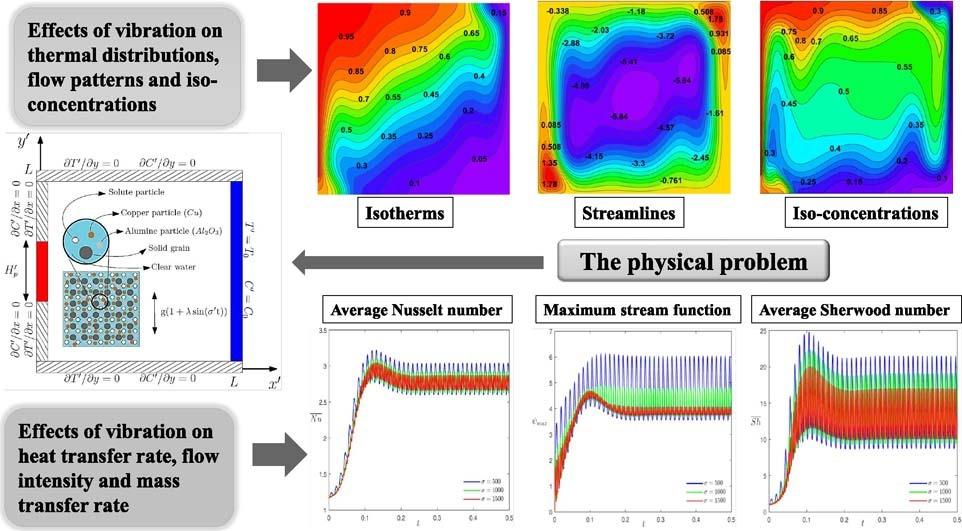
Computational Thermo Solutal Problems
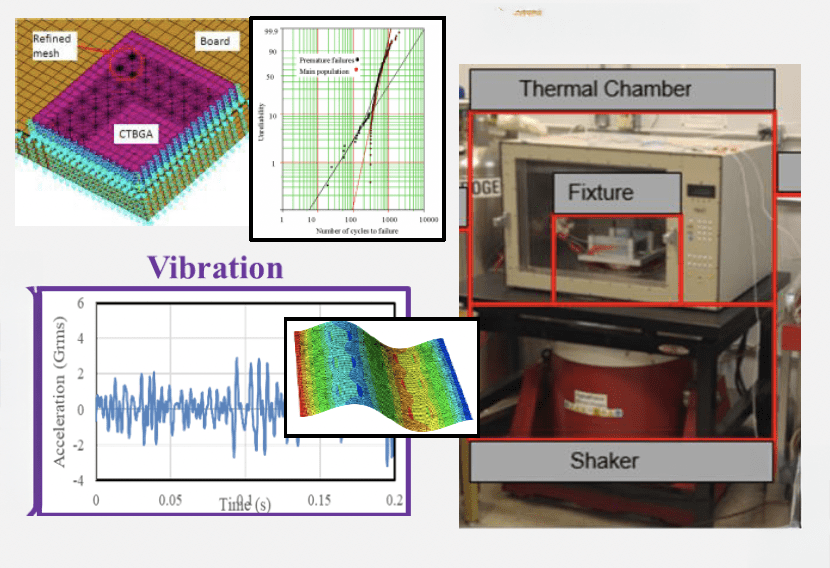
Vibration
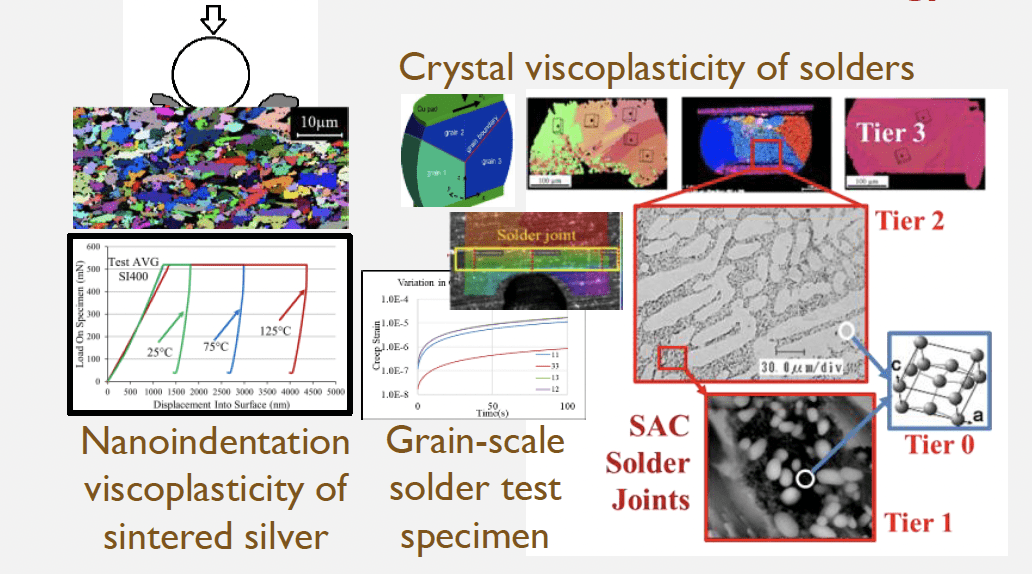
Multi-scale Materials Metrology