
Hardware Security
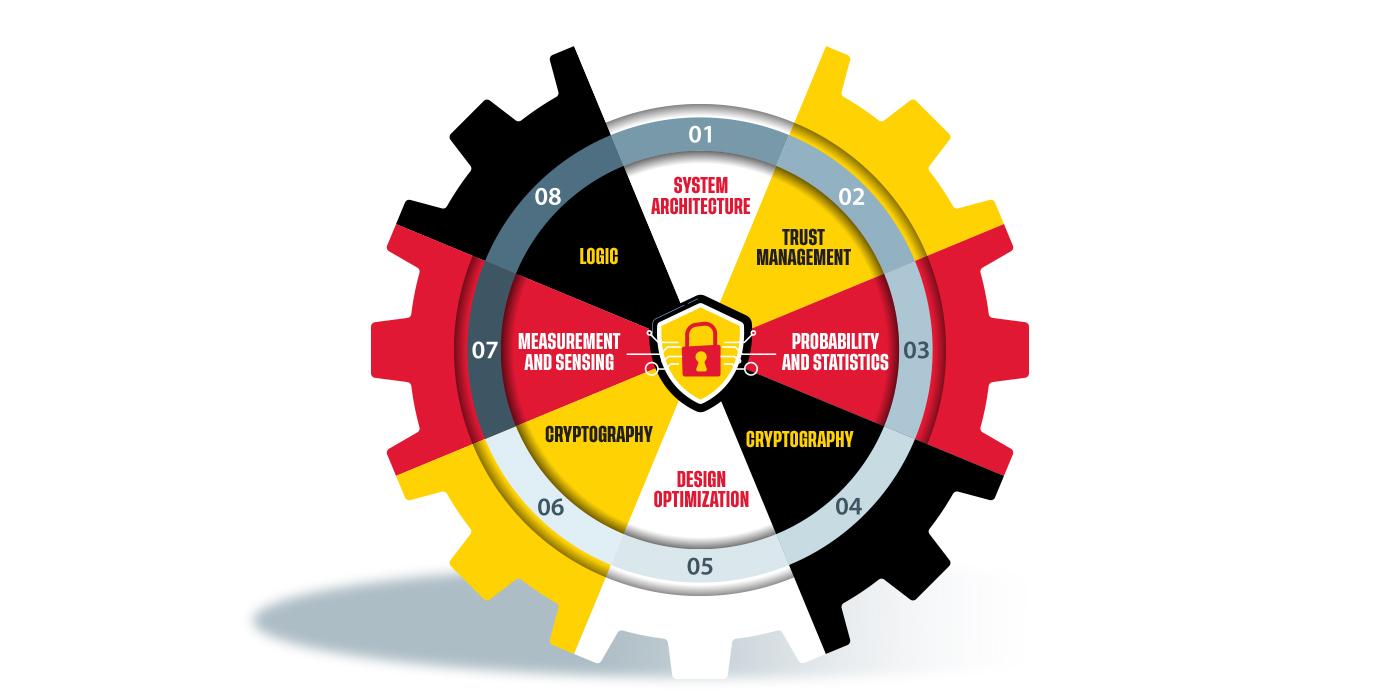
At the University of Maryland, research in hardware security for semiconductors focuses on protecting integrated circuits and microelectronic systems from threats such as hardware Trojans, side-channel attacks, and supply chain vulnerabilities through secure design, verification, and fabrication methods.
UMD faculty are investigating a myriad of approaches for improving traceability and provenance of semiconductors. Various methods based on measuring the chip’s electrical properties and correlating with the chips “origin” signature as well as approaches NEED SPACE related to Physically Unclonable Functions are being developed. Other techniques which use imaging and advanced signal processing and AI/ML to develop traceability and trust assurance techniques are also of interest. UMD also has significant and well recognized capabilities and associated facilities for independent verification and validation of hardware security solutions NEED SPACE stemming from both academic and commercial innovations.
Our researchers have made significant contributions to addressing supply chain security through innovations which target malicious circuits (Trojans), IP theft, counterfeiting of semiconductors. Some of our solutions were among the first ones to counter very strong attacks such as the SAT attack. Side channel analysis and mitigation is also a potent theme of our research.
UMD researchers are at the forefront of investigating the role of AI in hardware security. First and foremost, AI models are proprietary IPs. Owners of the AI models need assurances on any possible theft of the model’s parameters through the hardware’s direct and side channels. UMD researchers have develop several solutions, some of which rely on private information retrieval and other cryptographic techniques, while others rely on tamper proof watermarking. AI in itself is also an attack vector on security constructs. AI based attacks can quickly learn from limited measurements and use methods such as generative AI to create high potent attack vectors. UMD research are developing techniques which use controlled randomization and confusion to thwart such attacks.